
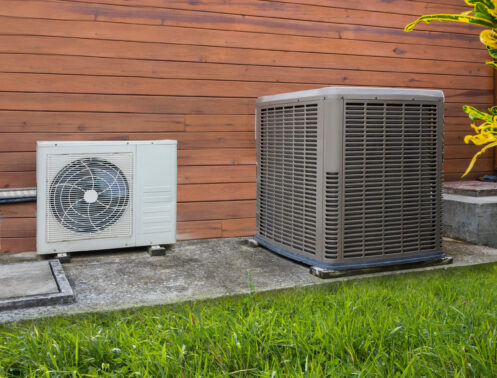
If you live in an older Southern California home, you may have spent years getting by without air conditioning and relying on fans during the hottest days. However, you may have decided you do not want to spend another summer in a stuffy home. Once you decide to add air conditioning, choosing the right system can feel confusing, especially when upgrading an older house.
Two popular options are traditional central air conditioning and ductless mini-split systems. Both work very well in Foothill Ranch, CA, but deciding which type to install requires careful consideration.
How a Central Air Conditioner Works
A central air conditioning system cools your home by circulating air through a network of ducts. Warm air from inside the house is pulled into the system through return vents. Before the air reaches the cooling components, it passes through an air filter that removes dust, pollen, pet dander, and other airborne particles.
The filtered air then moves across the evaporator coil inside the indoor unit. This coil contains refrigerant, a substance designed to absorb heat. As warm air passes over the cold coil, the refrigerant absorbs heat from the air. At the same time, moisture in the air condenses on the surface of the coil and drains away through a condensate line. This process both cools and dehumidifies the air.
A blower fan then pushes the cooled air through the home’s ductwork and out through supply vents in each room. Meanwhile, the refrigerant carries the absorbed heat to the outdoor unit. There, the compressor pressurizes the refrigerant and moves it through condenser coils. A fan blows outdoor air across these coils, releasing the captured heat outside. Once the heat is released, the refrigerant cools and returns to a liquid state before flowing back to the indoor coil to repeat the cycle.
Pros and Cons of a Central System
Central air conditioning systems work well when you want to cool an entire home. You can also set up central air with separate zones and their own thermostats. This allows you to raise the temperature in parts of the home that you’re not using.
However, residential central air systems typically use two to four zones. If you have a large house with many occupants who all prefer different temperatures, those zones may still feel limiting. Central air conditioners can also consume a significant amount of energy because they are designed to cool large areas of the home at once. Even with zoning, you usually can’t completely shut off cooling to individual rooms. This means there are limits to how much energy you can conserve without raising the overall temperature.
How a Mini-Split System Works
Ductless mini-splits use indoor air handlers to cool individual rooms or zones without ductwork. Each indoor unit contains an evaporator coil and a fan, which circulate air within the room. The unit absorbs heat from the air and cools the space directly, giving you precise temperature control.
The indoor unit connects to an outdoor condenser through a small conduit that houses the refrigerant and power lines. The outdoor unit houses the compressor and condenser coil, which release the absorbed heat into the outside air. The refrigerant then returns to the indoor unit to continue the cooling cycle. Because each air handler operates independently, mini-splits allow you to cool specific rooms efficiently without affecting the rest of the home.
Pros and Cons of a Mini-Split
Mini-splits allow whoever is in each room to control that room’s thermostat. If one person doesn’t want the air conditioner on in their room, they can turn off their unit, while someone in the next room can keep theirs running. You can connect more than one indoor unit (usually up to four) to a single outdoor unit, maintaining individual control for each space.
For larger homes with many rooms, you may need more than one outdoor unit. Even with four indoor units connected to a single outdoor unit, homes with multiple bedrooms often require two or three exterior units. This flexibility comes at a cost, as adding extra outdoor units increases both equipment and installation expenses compared with a central AC system.
Installation in Homes With Existing Ducts
If your home already has ductwork for a heating system, adding central air conditioning is generally more straightforward than starting from scratch. The existing ducts can carry cooled air throughout the house, so you don’t need to install a new infrastructure. However, the ductwork may require evaluation and upgrades to handle the additional airflow and cooling load. In addition, older ducts can have leaks, insufficient insulation, and a poor layout, which reduce efficiency and comfort. A professional HVAC contractor can assess the system, seal any leaks, and ensure airflow is balanced in each room.
Adding central AC requires installing an outdoor condenser and connecting it to an indoor evaporator coil. In many homes with heating-only ductwork, the furnace setup can be adapted to house the coil. However, careful installation is necessary to avoid airflow restrictions or noise. Proper refrigerant line sizing, electrical connections, and thermostat placement are also critical to ensure the system performs as expected. Even though there are expenses associated with updating ductwork to accommodate central AC, it is often the most cost-effective choice. This is especially true if you would need more than one outdoor unit in a mini-split system to cool your home adequately.
Why Mini-Splits Are Often the Better Choice for Homes Without Ductwork
For homes that lack ductwork, mini-splits offer a simpler solution. Each indoor unit cools a specific room or zone and connects to an outdoor condenser through a small conduit carrying refrigerant lines, a condensate drain, and power wiring. This setup requires only a single wall or ceiling opening per unit, minimizing construction work and disruption to the home’s interior.
Mini-splits also provide independent temperature control for each indoor unit, allowing for more efficient cooling and reducing energy waste in rooms that aren’t in use. Because no ductwork is needed, installation is faster and often less expensive than retrofitting a traditional central system, especially in older homes with unusual layouts, multiple stories, or limited attic space. For homeowners weighing convenience, cost, and comfort, mini-splits can be a highly flexible option.
Call Us When It’s Time to Install AC
Keeping your Foothill Ranch home cool this summer is totally possible with the help of our team at White Mechanical, Inc.. We install, repair, and maintain air conditioning systems, including central AC and ductless mini-splits. As a local business, we focus on building long-term customer relationships. This means you can expect quality work at reasonable prices.
Contact us today to schedule an appointment with one of our experienced technicians.